
Generator Transfer Switch Installation Service
Transfer switch installation is what makes a generator safe to connect to your home or business. The switch disconnects your wiring from the utility before generator power flows in. That break-before-make design keeps generator power off the utility lines, where it could reach line workers and damage equipment when utility power returns. Reliant Electric installs transfer switches for standby and portable generators. Our license number is RELIAEL783ON.
A transfer switch sits between the utility service, the generator and the circuits it backs up. NEC Article 702 covers optional standby installations like this one. The switch must be listed for the job and rated for the available fault current where it is installed. We match each switch to the panel, the generator and the loads you want running during an outage.
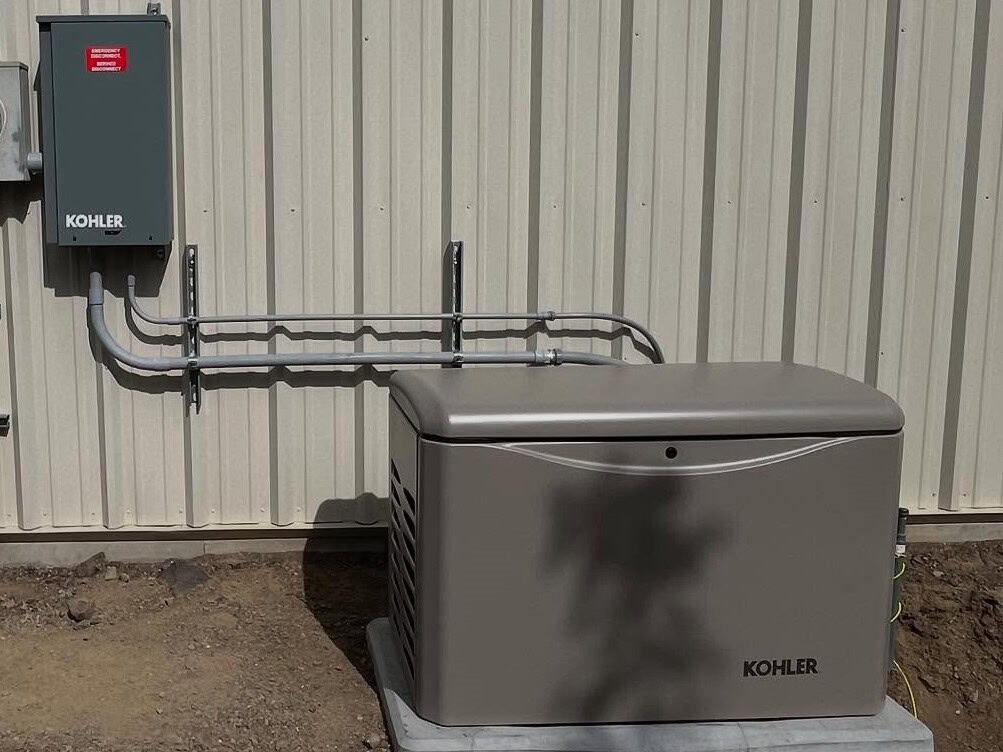
We Install Automatic and Manual Transfer Switches
An automatic transfer switch, or ATS, pairs with a standby generator. It senses when utility power drops, signals the generator to start and moves the load once the generator is ready. When utility power returns, it switches back and lets the generator cool down and shut off. No one has to be home.
A manual transfer switch pairs with a portable generator. You roll the generator outside, plug its cord into a power inlet box on the wall, start it and flip the switch. Only the circuits wired to the switch get power.
For whole-house coverage, a service-entrance rated ATS can serve as the main service disconnect.
How Transfer Switch Size Is Matched to Generator Capacity
The transfer switch amp rating has to match the circuits it carries, and the generator must carry that load. NEC Article 702 sets the rule for automatic switches. The generator must handle the full load the ATS picks up, or the install needs automatic load management. Load management modules shed large loads, like an AC unit or an electric range, until the generator has room for them. We size this with a load calculation under NEC Article 220.
With a manual switch, the owner chooses which circuits to run, so the switch usually covers a set group, like the furnace, refrigerator, well pump and lights. Transfer switch work needs an electrical permit and inspection in most areas and we have that.
Ready to Connect Your Generator with a Transfer Switch?
If you already own a generator, have the model, the kW rating and the fuel type ready. For a portable unit, also tell us the plug type on its largest outlet. That tells us which inlet box and switch will fit. If you are still choosing a generator, or you are not sure which switch you need, start with a panel check. We look at your panel, list the loads you want covered and explain the options before any work starts.
Frequently Asked Questions
What Should I Ask An Electrician Before Installing A Transfer Switch?
Ask four things. Is the electrician licensed? Will the work be permitted and inspected? Was a load calculation done to size the switch? Is the switch listed and rated for your service? Reliant Electric walks you through each one before any work starts.
Should I Get A Transfer Switch Or An Interlock Kit?
It depends on your panel and how you want to run the generator. A transfer switch is a separate listed device that isolates your circuits from the utility, and it works with standby or portable generators. An interlock kit is a sliding plate that keeps the main breaker and the generator breaker from being on at the same time. Reliant Electric installs transfer switches and will explain the tradeoffs for your panel.
Can A Transfer Switch Be Added To A Generator I Already Own?
Yes. Reliant Electric adds transfer switches to portable and standby generators owners already have. Have the generator’s model, kW rating, fuel type and largest outlet ready. We confirm the generator can carry the circuits you want covered, then size the switch to match.
Where Does The Transfer Switch Get Installed?
Most transfer switches mount next to the main panel. A manual switch usually goes indoors beside the panel, with the inlet box on an outside wall. A service-entrance rated ATS often mounts outside near the meter, since it includes the main disconnect. Reliant Electric picks the spot based on your service layout and the required working clearance.
How Long Does A Transfer Switch Installation Take?
It depends on the switch type and your panel. A manual switch with an inlet box is a smaller job than a service-entrance rated ATS paired with a new standby generator. Reliant Electric gives you a time estimate after looking at your panel, the generator location and the circuits you want covered.
Will My Power Be Off During The Installation?
Yes, for part of the job. The circuits moving to the transfer switch have to be shut off while they are rewired. A service-entrance rated ATS can require the utility to disconnect service at the meter. Reliant Electric tells you ahead of time when the power will be off and plans the work to keep that window short.
Is An Inspection Required After The Switch Is Installed?
Yes, in most areas. The inspector checks that the switch is listed, sized and grounded correctly, and that it cannot connect the generator and the utility at the same time. Reliant Electric then tests the full transfer sequence, so you know the switch works before the next outage.